
POP sound refers to the explosive sounds produced by the transient impacts brought about by various operations of audio devices at the moments of power-on, power-off, and after power-on stabilizes.
Shenzhen Siyuante Technology Co., Ltd. has long been dedicated to the promotion and sales of audio power amplifier ics and motor drivers. Now, we summarize the application problems encountered in the promotion of audio power amplifier ics and share with you the solutions to the POP sound when the audio system is turned on and off.
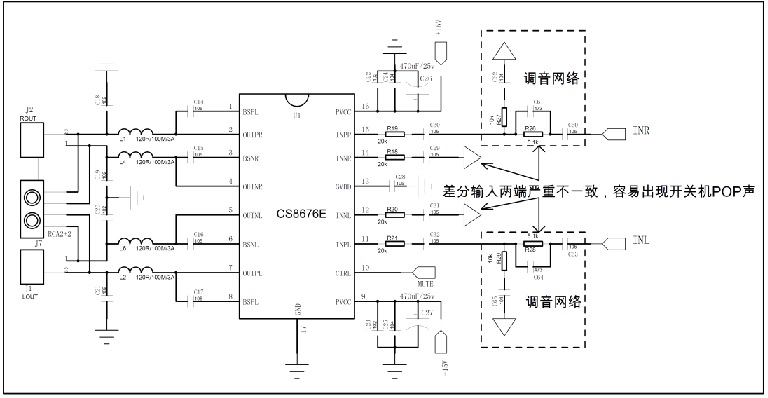
1. The parameters at both ends of the differential input are inconsistent
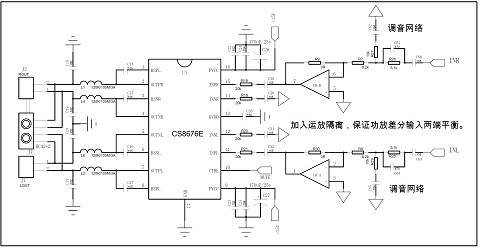
Most Class D power amplifiers have differential inputs. If the parameters at both ends of the differential input are inconsistent, the charging and discharging times on both sides of the power amplifier will be different when it is powered on and off. After subtracting from both sides, an additional electrical signal will appear. This electrical signal, when amplified by the power amplifier to the speaker end, will produce a POP sound. So try to keep the networks and parameters at both ends of the differential as consistent as possible. If the main control decoding output is a single-ended signal and there is a complex tuning network, it is recommended to use an operational amplifier for isolation to overcome this problem.
2. The main control timing does not match the power amplifier
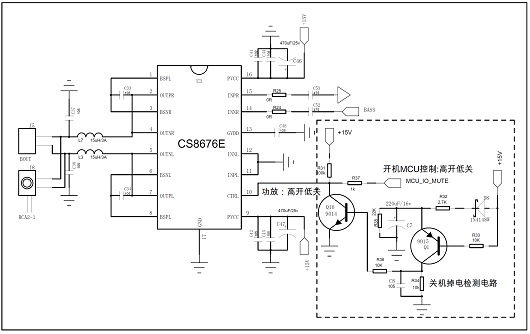
Since the bias voltage of the audio analog output of the main control decoding chip is generally established after the output is enabled, at this time, the CTRL pin of the audio power amplifier needs to be kept low (high on, low off). Only after the bias voltage of the analog output of the main control chip stabilizes can the CTRL pin be raised to turn on the power amplifier. On the contrary, when shutting down, if you need to turn off the audio analog output function of the main chip, you should first pull down the CTRL pin to turn off the power amplifier, and then turn off the analog output signal of the main control chip. This timing sequence is designed to ensure that no POP sound is caused when the bias voltage of the main chip's analog output is powered off. Adjusting the timing sequence through the main control software to solve the POP sound on and off is very applicable to soft-on-off speakers and is also easy to handle for hard-on-off speakers when they are turned on. However, when they are turned off, since the main control is not under control, an external power-off detection circuit needs to be added to solve the problem.
3. An additional power-off detection circuit is added
The principle of solving the POP sound when the power is turned on or off is the same no matter which method is used: when starting up, wait for a delay for the power amplifier to supply power, and then turn on the power amplifier after the main control audio source stabilizes. When shutting down, before the power amplifier's power supply voltage drops to the minimum operating voltage and before the bias voltage of the main control signal source undergoes a sudden change, pull down the power amplifier's enable pin (high on, low off). The following is the hardware power-off detection circuit:
免责声明: 本文章转自其它平台,并不代表本站观点及立场。若有侵权或异议,请联系我们删除。谢谢! Disclaimer: This article is reproduced from other platforms and does not represent the views or positions of this website. If there is any infringement or objection, please contact us to delete it. thank you! |

WeChat Official Account

WeChat Service
 Email
Email QQ
QQ 13823761625
