
Source: ADI
With the rapid development of artificial intelligence technology, the global robotics industry is undergoing unprecedented changes and opportunities. Recently, Analog Devices, a globally leading semiconductor company (hereinafter referred to as "ADI"), held a media sharing session on humanoid robots titled "Activating Edge Intelligence, Co-creating a Embodied Future". As a member of China's innovation ecosystem, ADI, along with representatives from industrial partners such as the Beijing Humanoid Robot Innovation Center (a national and local co-built innovation center for embodied intelligent robots), Intime Robotics, and Songyan Power, shared their insights on the latest achievements, future plans, and application prospects of humanoid robots, jointly exploring the broad future of the embodied intelligent industry.
ADI helps humanoid robots evolve towards "physical intelligence"
As a pioneer in the field of automation, ADI has won wide acclaim in the industry for its outstanding capabilities in perception, connection, control and interpretation. And humanoid robots are precisely designed to "condense" these capabilities into a dexterous body. Dr. Baoxing Chen, an academician and Vice president of technology at Analog Devices (ADI), stated in his keynote speech titled "From Digital Factories to Humanoid Robots, Building an Industrial Intelligent Future in All Aspects" that from ToF camera modules used for depth measurement to IMUs and tactile sensors for achieving human-like dexterity, ADI is capable of offering a full range of products from core technologies to systematic solutions, thereby accelerating the implementation of humanoid robots.
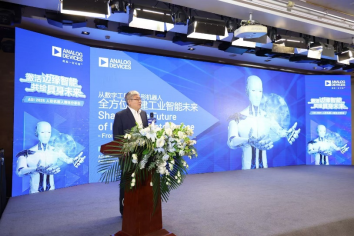
Dr. Chen Baoxing is also responsible for leading the research and development of magnetic haptic sensors at ADI. In his speech, he shared the unique advantages of ADI's magnetic coupling tactile sensors. "The magnetic coupling tactile sensors that ADI is developing overcome the problem of insufficient reliability of common tactile sensors on the market (piezoresistive, capacitive and optical detection types) due to environmental influences. They can effectively resist the influence of moisture and temperature changes, and at the same time have the ability to shield external magnetic field interference." This ensures its stability and reliability in complex environments.
"Embodied Tian Gong Ultra" embarts on a journey of cross-scenario generalized application
On April 19th this year, at the world's first humanoid robot half marathon, "Embodied Tiangong Ultra" completed 21.0975 kilometers in 2 hours, 40 minutes and 42 seconds, becoming the first humanoid robot to finish a half marathon. And behind this lies the unremitting efforts of the Beijing Renren team. According to Wei Jiaxing, the public relations director of Beijing Renren Brand, the R&D team has continuously improved the heat dissipation performance of the "Body of Tian Gong Ultra" and its integrated joints, as well as the generalization ability of the motion control algorithm. Through the optimization of the energy consumption system and the application of fast battery swapping technology, it has gained stronger endurance. Only when humanoid robots pass through numerous tests such as stability, battery life and heat dissipation can they truly have the potential to enter various application scenarios.
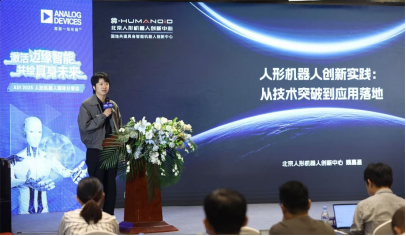
Wei Jiaxing, the brand public relations director of the Beijing Humanoid Robot Innovation Center (a national and local co-built Humanoid Intelligent robot innovation center), delivered a keynote speech titled "Humanoid Robot Innovation Practice: From Technological Breakthroughs to Application Implementation"
At the same time, Wei Jiaxing also emphasized the crucial significance of the general embodied intelligence platform "Huisi Kaiwu" for the cross-body and cross-scenario generalization application capabilities of humanoid robots. "Huisi Kaiwu" endows robots with an intelligent embodied brain and a flexible embodied cerebellum, enabling them to have the generalization ability to quickly solve problems in different scenarios. In the future, embodied intelligent robots will no longer need to be developed from scratch for a single vertical scenario. Empowered by the "Huisi Kaiwu" platform, they can quickly acquire the ability to flexibly complete diverse tasks in different scenarios.
Yinshi Robot creates dexterous hands with the ultimate cost performance
Dexterous hands are the core yardstick for measuring the maturity and commercial application value of robots. As the earliest company in China to commercialize the five-fingered dexterous hand and the only one currently achieving large-scale delivery, Fang Hainan, the CMO of Intime Robotics, stated in his keynote speech that by rapidly enhancing batch production capacity and continuously launching high cost-performance products, the company's dexterous hand sales reached 4,000 units in the first half of 2025. This is mainly attributed to the company's full integration of the underlying technical routes of its products, developing the core component product of the Dexterous Hand, the micro servo electric cylinder. At the same time, the company's success in the micro servo electric cylinder can further spread out the BOM cost of the Dexterous Hand.
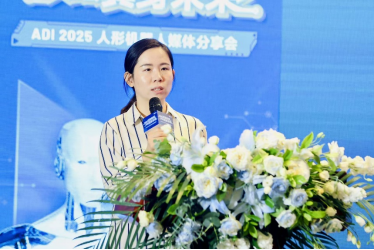
After years of development, Intime Robotics has launched five standard series of dexterous hand products. Among them, the RH56DFX series, with its perfect balance of speed and power, has become one of the series with the largest shipment volume in the past five years and is also the most widely used product in scientific research and grasping scenarios. The F1 series launched this year has undergone numerous optimizations and upgrades based on the DFX, both in terms of hardware and software. It can be said that it is completely designed to meet the current demands of humanoid robots. In addition, Intime Robotics has launched the RH5EG1 series of dexteric hand products with 14 active degrees of freedom. In fact, each additional degree of freedom means an additional micro-servo cylinder. Within a limited space, how to ensure the stability and reliability of product performance under the circumstances of increased mechanical structure complexity is a key issue that needs to be considered when developing high-degree-of-freedom products." Fang Hainan introduced it this way.
On the path from "showing off skills in the laboratory" to industrial scenarios and commercial applications, humanoid robots still face multiple challenges, and this is precisely the key direction that the entire industry is focusing on. During the roundtable discussion session titled "From Prototype to Mass Production - The Breakthrough Path for the Commercialization of Humanoid Robots" hosted by CAI Zhenyu, the Director of Industrial Marketing for ADI China, the participants actively and enthusiastically exchanged views and shared experiences on topics such as the technological development, potential challenges, and industrial prospects of humanoid robots.
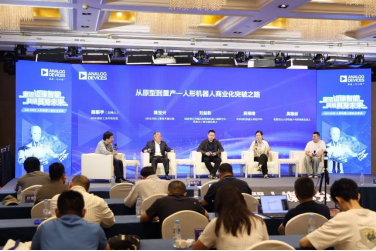
When it comes to coping strategies, the four experts shared the strategies of their respective enterprises. Liu Yizhang stated that the Innovation center is committed to achieving a full-chain breakthrough from underlying components to robot systems and then to general embodied intelligent platforms through continuous technological iteration. Fang Hainan pointed out that Yinshi focuses on the research and development and large-scale mass production of integrated linear actuators and micro servo electric cylinders, serving the robot and new energy fields with high-consistency products, and continuously optimizes costs and promotes technological iteration to maintain core competitiveness. Wu Yajian mentioned that the reason why Songyan Power robots can perform high-difficulty actions such as somersaults mainly relies on algorithmic trajectory optimization, imitation learning, and reinforcement learning training, and all of this is based on a stable hardware structure. Dr. Chen Baoxing stated that ADI is committed to promoting physical intelligence. It not only offers a full range of products from core technologies to systematic solutions, but also focuses on deeply integrating artificial intelligence with control systems and forming a closed-loop control. Meanwhile, ADI also advocates building high-precision physical models and digital twin simulation platforms to pre-optimize the movements and scenarios of robots, thereby enhancing the adaptability and reliability of system solutions.
When it comes to the future, the four guests unanimously stated that humanoid robots will first experience an application explosion in relatively simple scenarios such as industry and logistics. As time goes by, robots are expected to gradually enter the household and service sectors. Dr. Chen Baoxing stated that in the long run, the ultimate goal of humanoid robot development is to achieve highly autonomous human-robot interaction, enabling robots to accompany humans, independently plan and complete tasks without human guidance.
At the end of this media sharing session, the attending guests and journalists also visited the National and Local co-built Innovation Center for Embodied Intelligent Robots together, experiencing the unique charm of embodied intelligence up close.
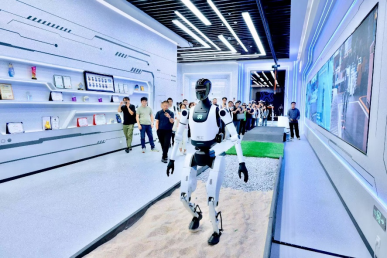
The attending guests and journalists jointly visited the Beijing Humanoid Robot Innovation Center (a national and local co-built innovation center for Embodied intelligent robots).
免责声明: 本文章转自其它平台,并不代表本站观点及立场。若有侵权或异议,请联系我们删除。谢谢!
Disclaimer: This article is reproduced from other platforms and does not represent the views or positions of this website. If there is any infringement or objection, please contact us to delete it. thank you!
矽源特科技ChipSourceTek

WeChat Official Account

WeChat Service
 Email
Email QQ
QQ 13823761625
